
Paper maché spooky lamp prop
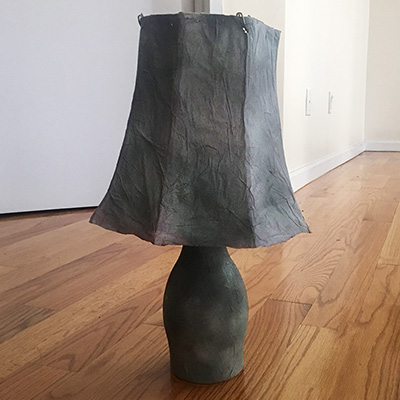
This is part five of my paper maché furniture projects for my séance Halloween party; see part one; chairs, part two; table, part three: mantel, and part four; nightstand.
I got the idea for this lamp when I saw this plastic bottle of almond milk in our fridge; it’s a neat bowling-pin shape that’s perfect for an old-timey lamp. I decided to add this lamp project to the list of lightweight paper maché furniture that we’re hanging from the ceiling for our spooky séance party.
Paper maché Victorian nightstand
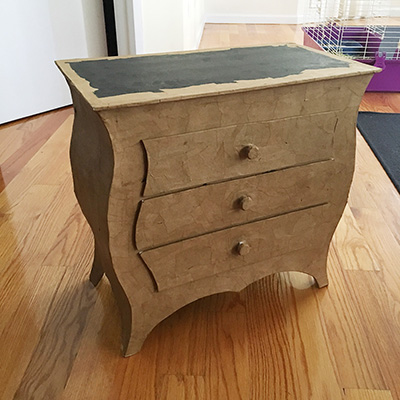
This is part four of my paper maché furniture projects for my séance Halloween party; see part one; chairs, part two; table, and part three: mantel.
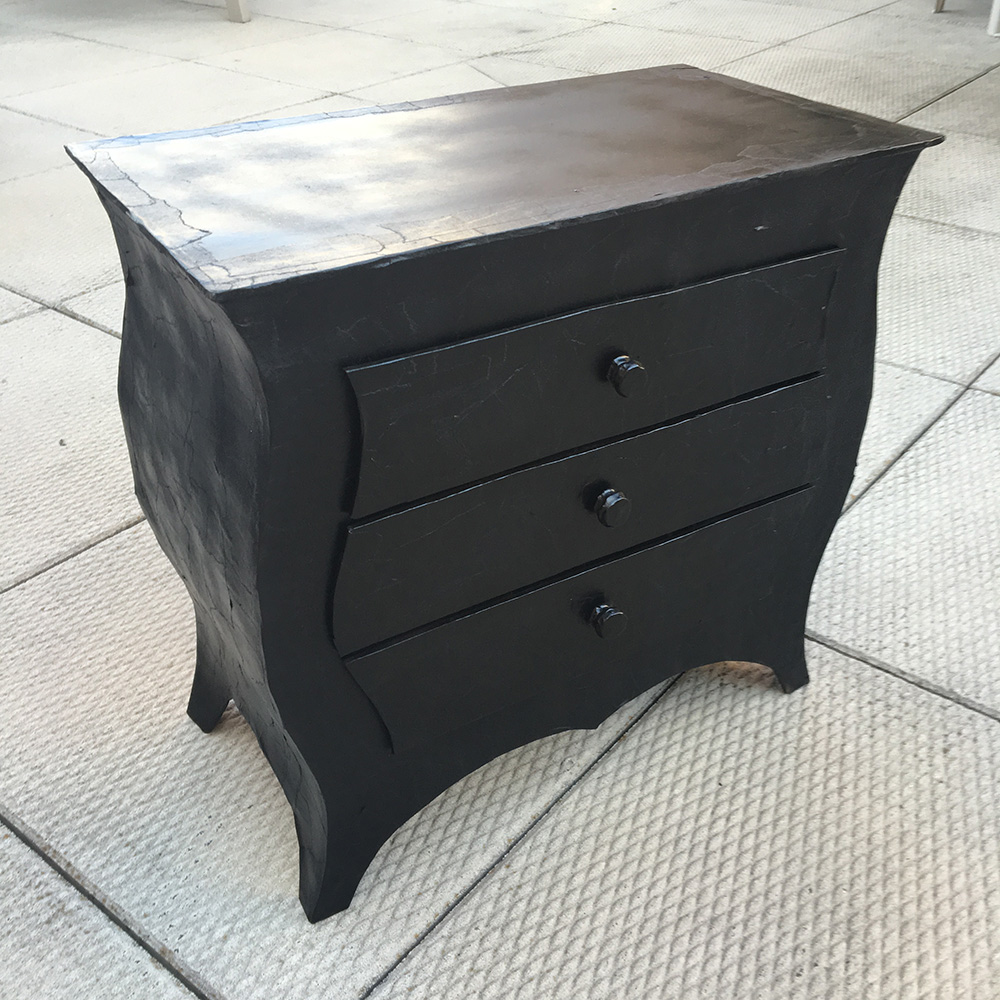
Okay, one last piece of furniture before I lose my mind! This time, a floating haunted nightstand with a floating haunted lamp.
I started the nightstand with three big pieces of foam board — the front, back, and top.
Mantel prop for my séance Halloween party

This is part three of my paper maché furniture projects for my séance Halloween party; see part one; chairs and part two; table.
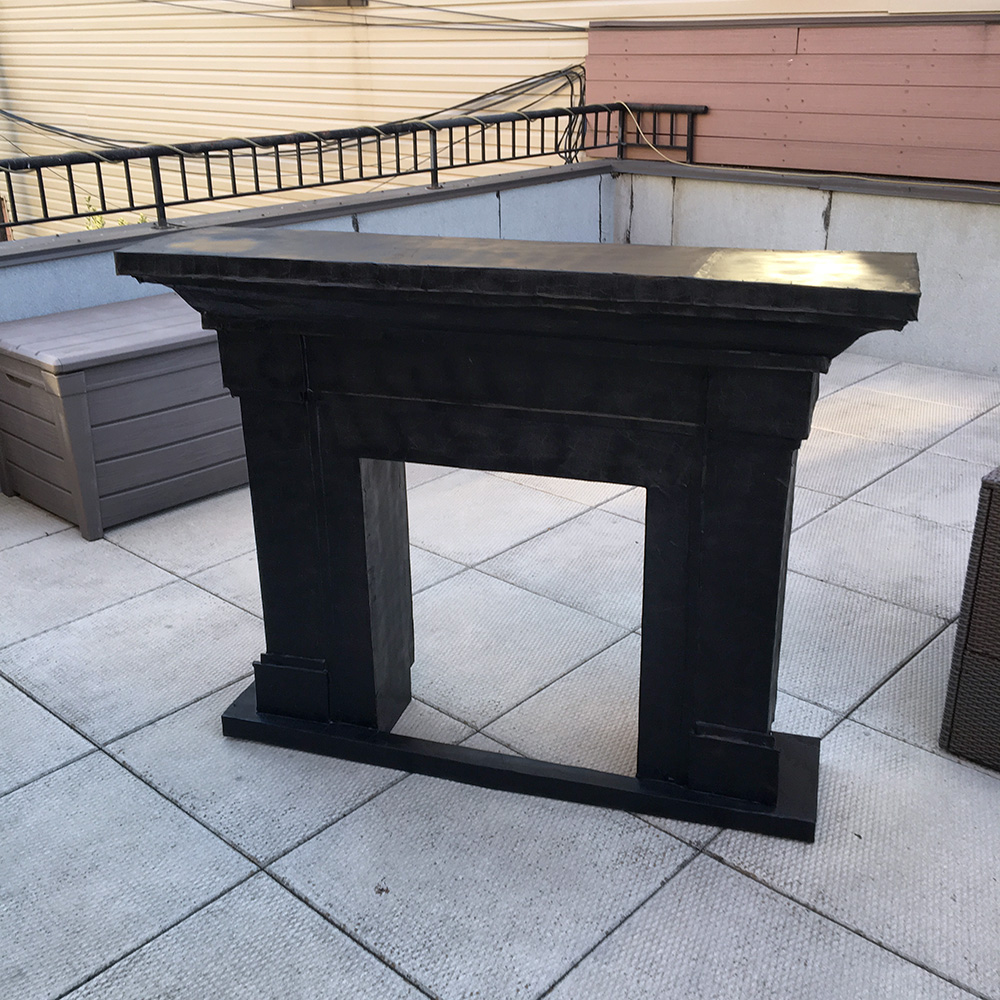
This mantel is possibly the biggest paper project I’ve ever made! (Well, this or the giant spider.) I don’t have a ton of work-in-progress photos for the construction of the mantel — I did a tremendous amount of sketching and measuring beforehand, and a lot more along the way as the thing came together and I kept adding things. Almost all of the pieces are foam board, with a little bit of poster board, all held together with lots and lots of packing tape and masking tape.
Paper maché table for my séance party
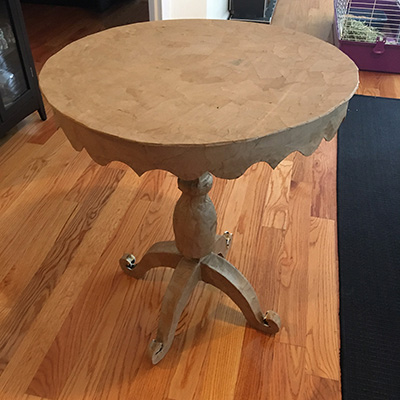
This is part two of my paper maché furniture projects for my séance Halloween party; see part one (chairs!) here.
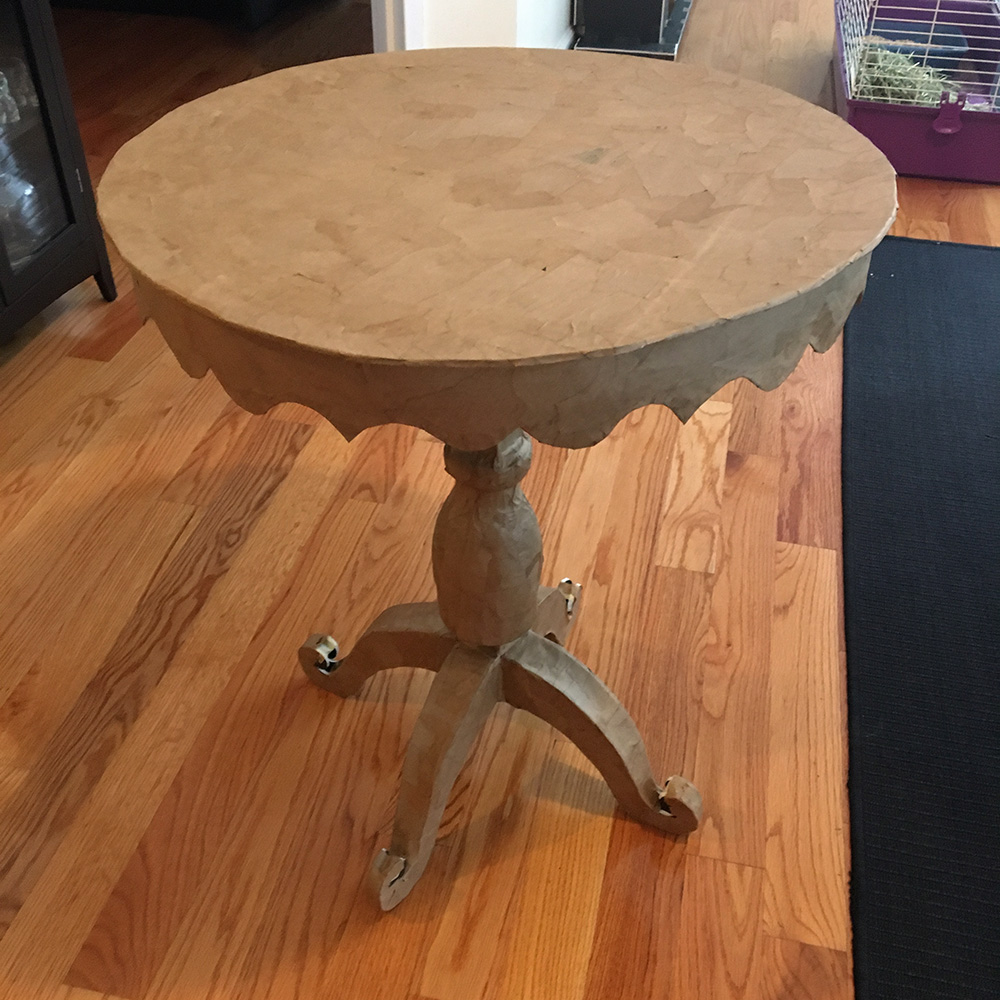
With the chairs done, I moved on to the table! Unlike the chairs, I didn’t have a real table handy to use as a model for this, so I just made up a table based on some Google image searches for victorian round table.
Paper maché chairs for my séance Halloween party!
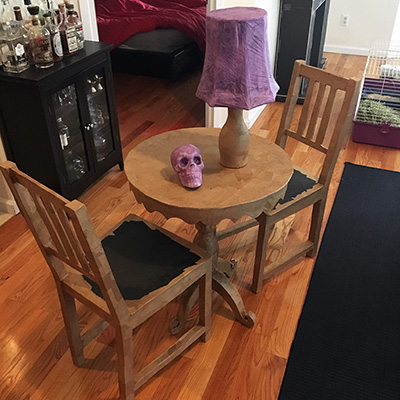
For my upcoming séance party I wanted to have a few pieces of paper maché furniture stuck upside down on the ceiling — a table with a crystal ball, two chairs, maybe a little dresser with a lamp, etc. The main guidelines I set for myself are: the furniture all has to be extremely lightweight, since it’ll all be attached with thumbtacks to the ceiling, and it doesn’t have to be super realistic, since the lighting in the party will be low. I started with the chairs; here’s how I made ’em!
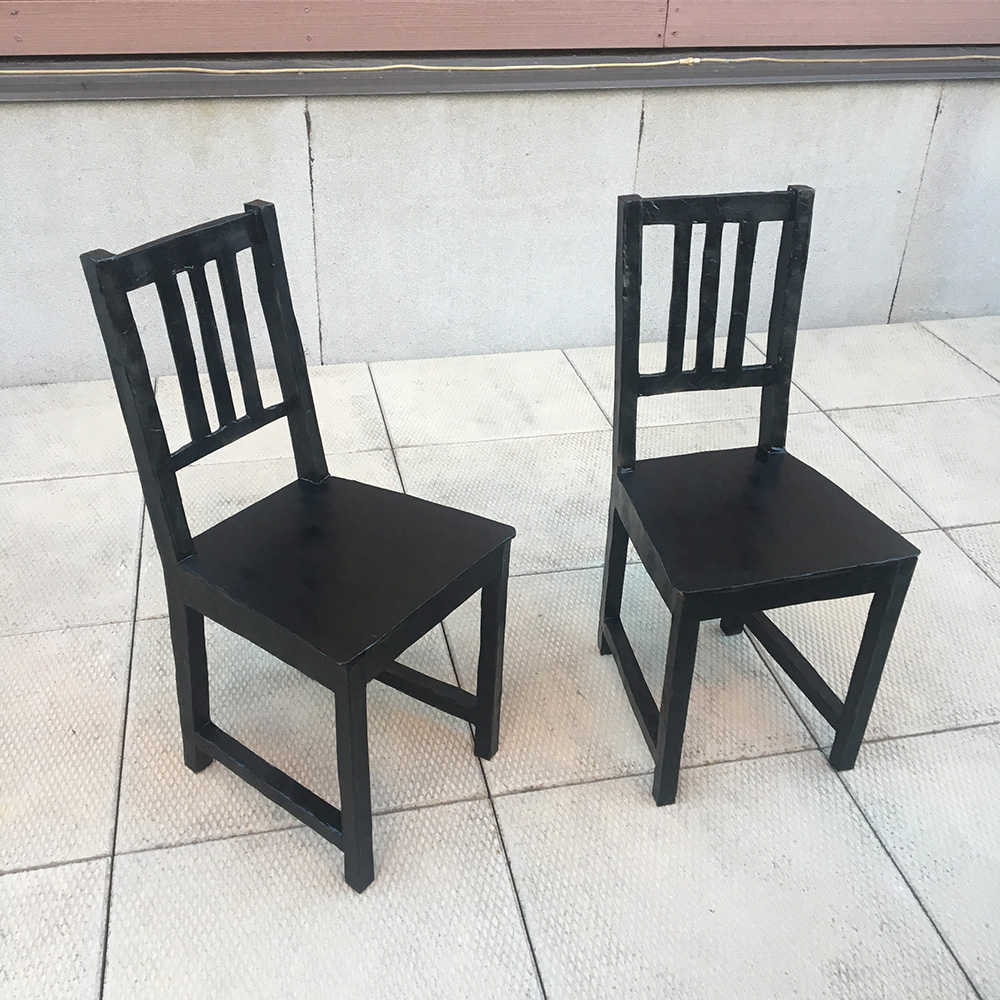
I have some simple Ikea chairs that I used as a model. My plan was to trace and/or draw the various pieces of a chair onto foam board, and then cut out all the pieces and assemble ’em and hope they resemble a chair.
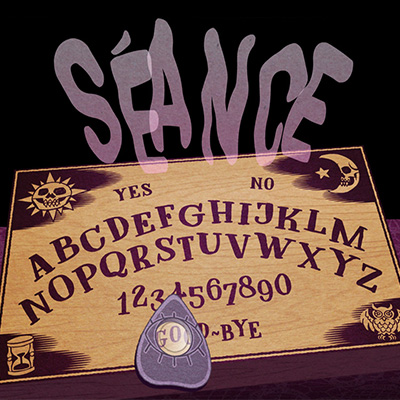
Halloween 2016 theme revealed: Séance!
Check out our animated séance party invitation! You (probably) ain’t invited but feel free to check out the video.
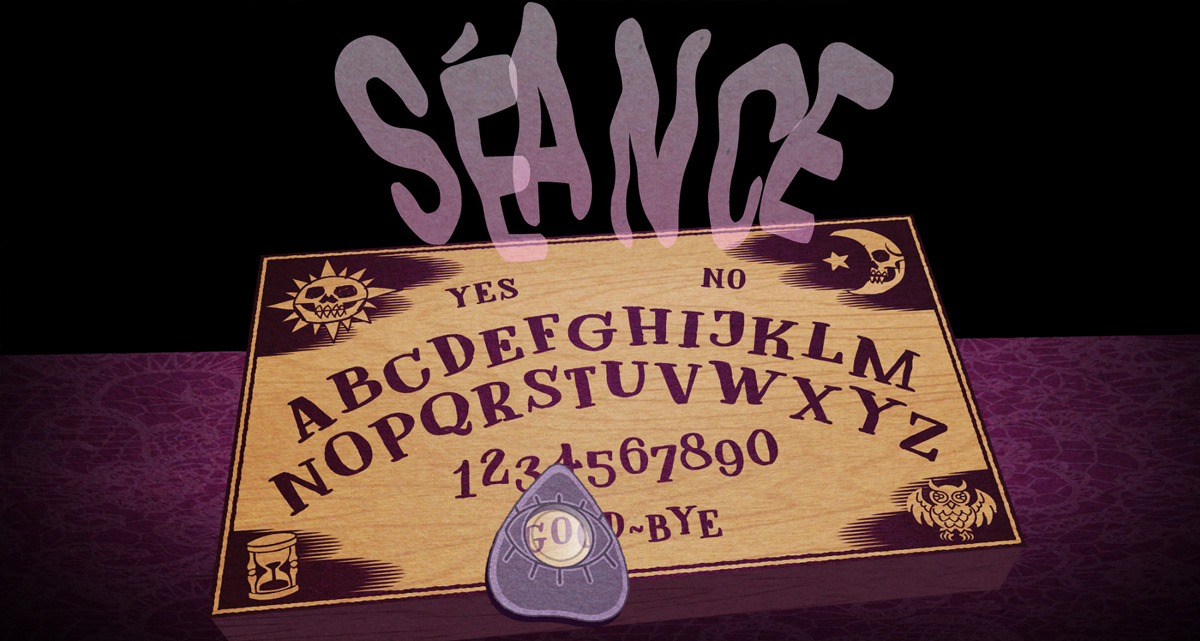
Coming soon: tons of paper maché and other ghostly decorating projects!
Teeth-making tips for big paper maché masks
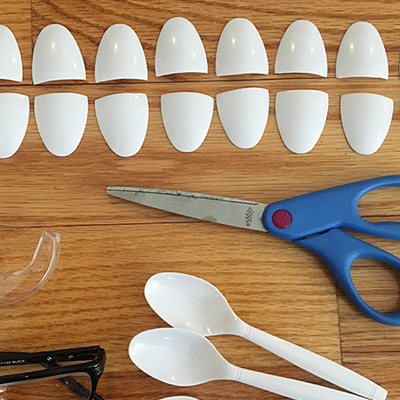
In all of the large paper maché masks and heads I’ve made, the teeth are always, always the most labor-intensive and challenging (and sometimes frustrating!) part. I’m always amazed at what a large proportion of my time and effort go into such a small part of the head! I’ve tried a few different methods for making teeth over the years, with varied success. Here are the methods I’ve used, and some pros and Cons:
Advanced paper maché mask-making tips, part 2

Okay, I wrote up some more of these tips! (Part one of my tips for making big paper maché masks is here.)
Design a base that’s easy to break apart
Maybe my favorite part of the whole mask-making process is the step when all the paper maché is dry and it’s time to cut the mask open and remove all the foam board, styrofoam, poster board, etc, along with tons and tons and tons of masking tape. While fun, this can be challenging and a little annoying at times because lots of the large shapes are locked into the paper maché and you have to do a lot of work cutting them apart from the inside before removing them in pieces. Read more…
Making big paper maché masks — advanced tips
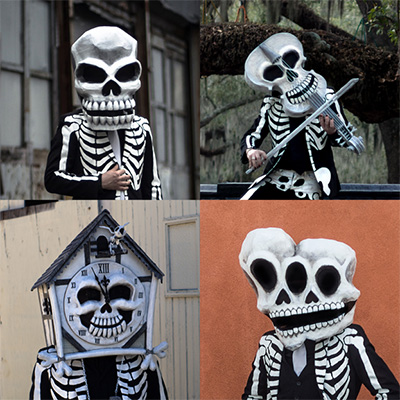
In making all my big paper maché masks I’ve learned a lot of important things along the way — things I could only figure out through trial and error, but now that I know about them they’re a huge help in every subsequent mask I make. I’m by no means an expert! I’ve only made four big skull masks so far, and I have two more in the works (one skull and one non-skull) but with each one I can see them getting easier and easier to make and to wear, thanks to these tricks I’ve worked out over the years. Here are some of them…
Hanging heavy decorations using magnets and tape

I discovered this great but strange method for hanging decorations on walls without having to use nails or thumbtacks. All you need is masking tape and some tiny magnets!
If you’ve done lots of decorating, you’ve experienced what happens when you try to hang something slightly heavy on drywall with masking tape. Let’s use a small woode picture frame as an example. You can put as many little loops of tape as you want on the back of the frame and the thing will still fall down after a little while. Read more…
Tip for drawing perfect circles

A lot of my projects call for drawing various circles to cut out of foam board or poster board. If the exact size isn’t important, I just trace a plate or a bowl or whatever. But sometimes I need a circle to be a precise size, so this is the trick I always use.
Tips for working with gesso
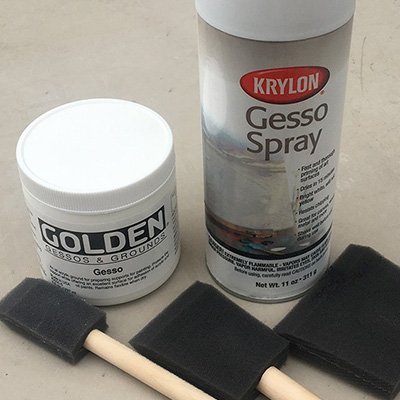
If you’ve ever created any paper maché projects and then painted them, you’ll surely have noticed that the edges of your paper are often still visible, sometimes even after several layers of paint. I hate seeing those paper edges in my stuff, and I’ve learned I can reduce this with a few techniques, like being really precise with my last layer of paper, and doing a final layer of just paste smoothed over the whole shape with my hands. Still, even when I do that stuff I end up still seeing those paper edges through the paint sometimes. It drives my crazy.
A video of my cuckoo clock skull mask in action!
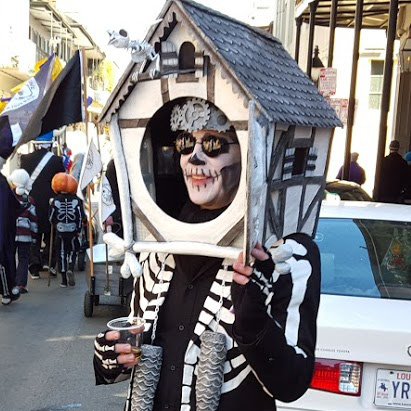
A friend of mine took this video of me opening and closing my mask on Mardi Gras morning, around 9am at Jackson Square. The hinge mechanism in the door (made from a plastic file folder and some magnets) held up great over the course of the long day. Check out parts one, two, and three of my process for making this mask, and the article I wrote about making the little cuckoo bird skeleton. Fun!
Making the bird skeleton for my cuckoo clock mask
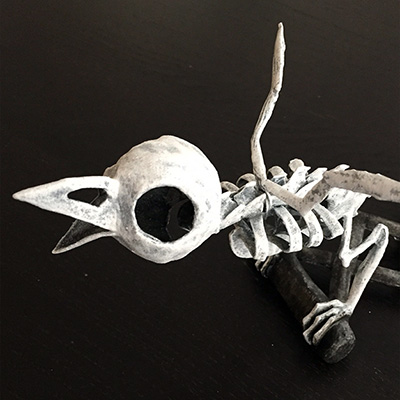
I made this bird skeleton for my cuckoo clock skull mask for Mardi Gras 2016. Making this skeleton was extremely challenging, and I basically made up all the steps as I went along. I had no idea what I was doing, but I learned a lot and I’m very happy with the end result. I didn’t take as many pictures as I should’ve along the way, so I’ve done some sketches to explain certain steps.
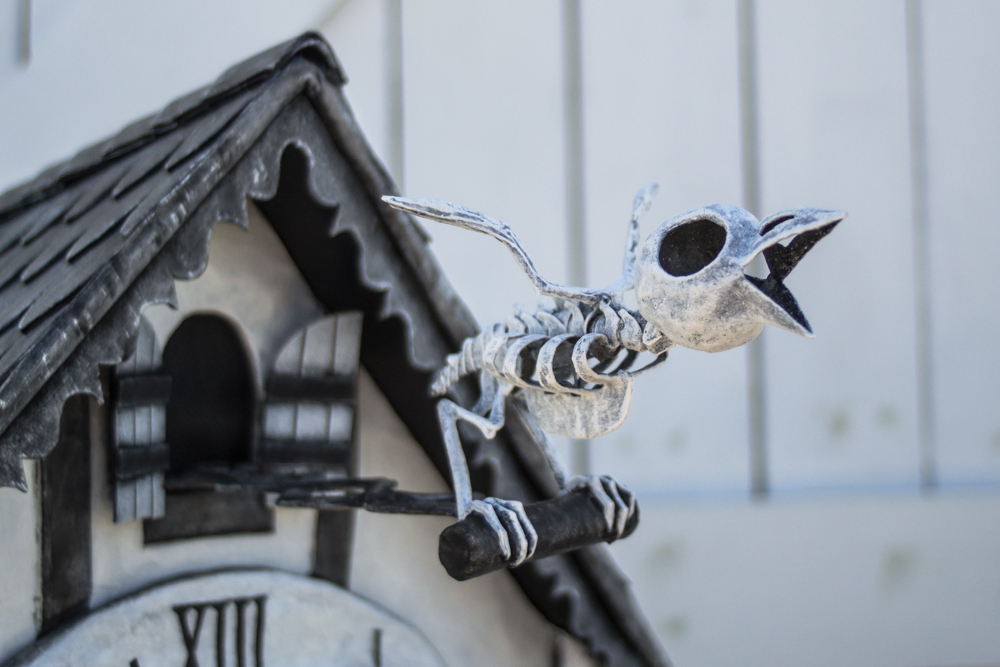
The main materials in the bird skeleton are:
Cuckoo clock skull mask — part 3
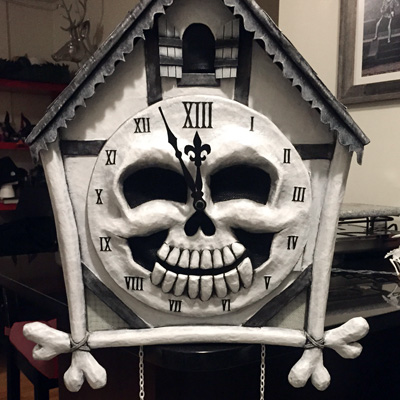
This is part three of my cuckoo clock skull mask project. See part one and part two.
Where were we? Oh yeah, it’s time to paint!
Painting the mask
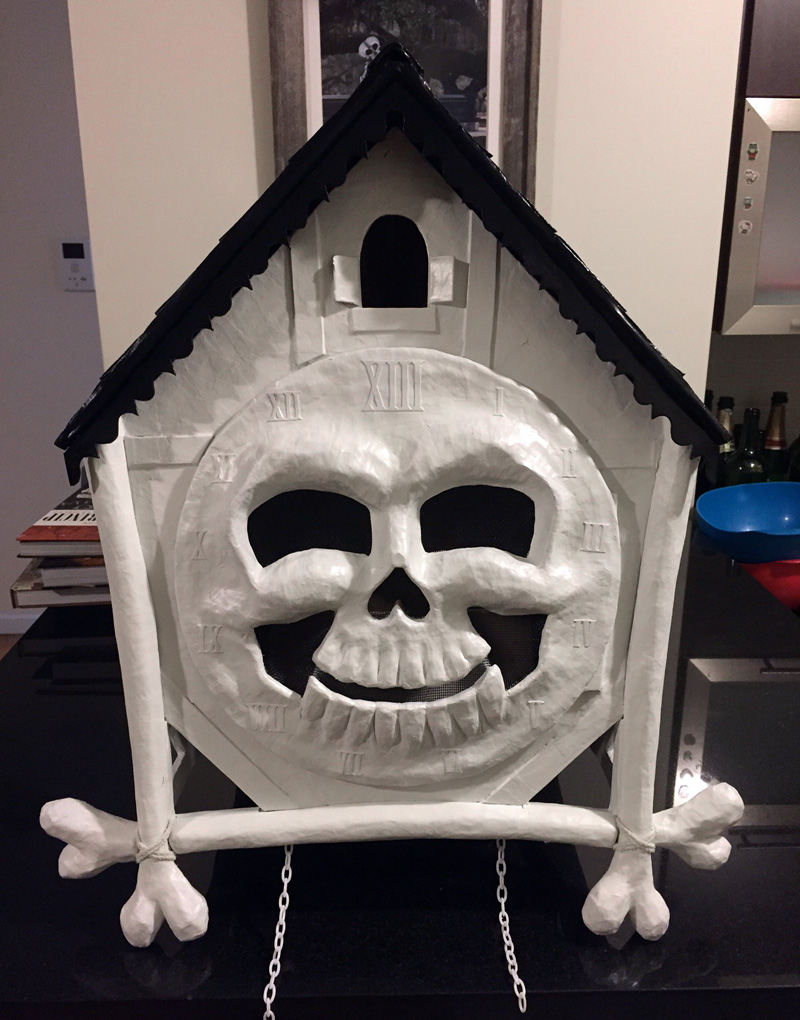
I painted the clock body and the roof separately for the most part before joining them together. I first protected the screen in the eyes/nose/mouth with blue masking tape (the kind that’s really easy to remove), and then I spray painted the entire exterior of the clock white. I separately spray painted the roof black. I let these pieces air out for about three days outside.
Cuckoo clock skull mask — part 2
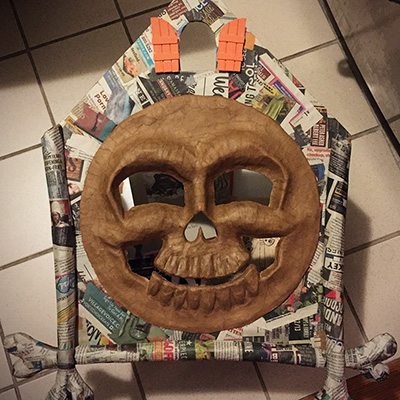
This is part two of my cuckoo clock skull mask project. See part one and part three.
Scale-pattern shingles on the roof
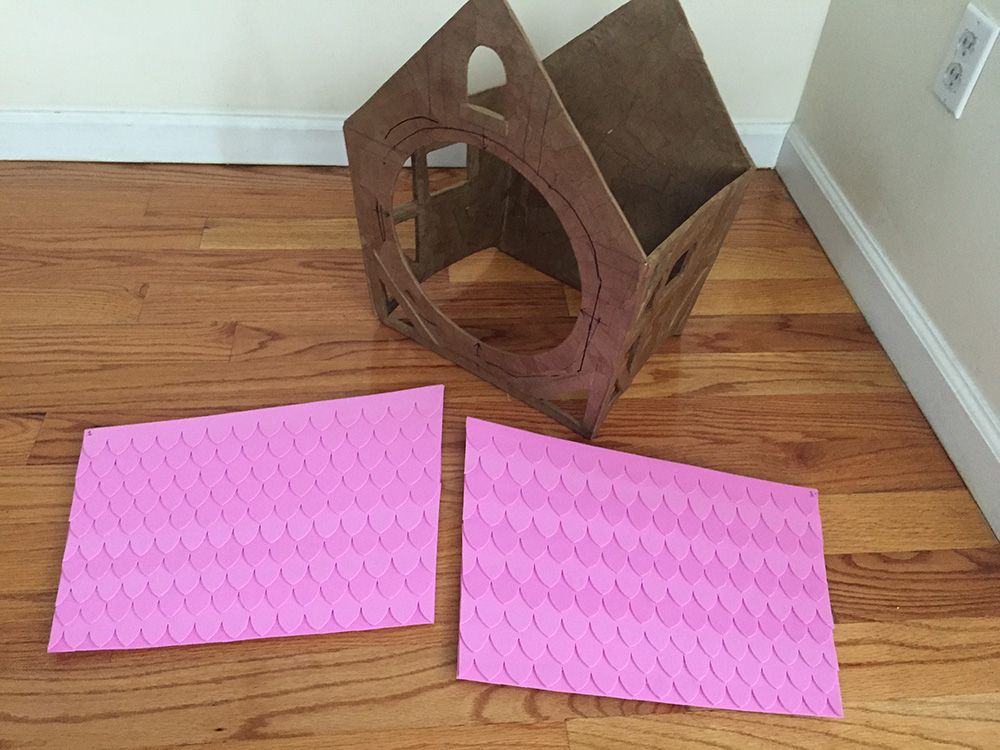
I started the roof with two foam board panels. My process for creating the scale-shaped shingles was kind of convoluted…
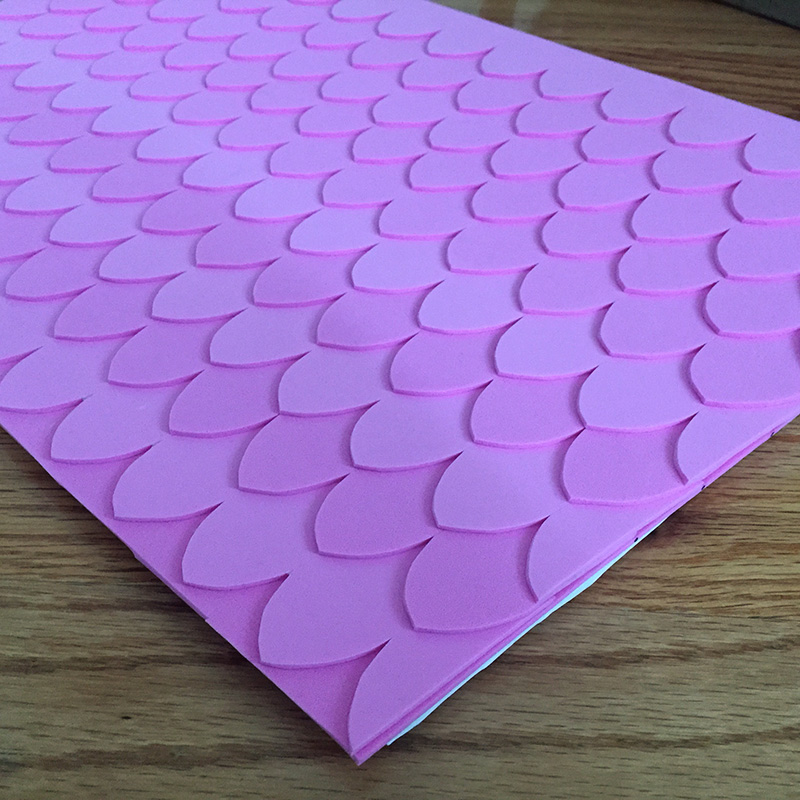
The pattern on the roof is made with a few layers of craft foam (aka Wonderfoam). I made this way harder for myself than it needed to be! Since all my wall and roof panels were irregular shapes — there isn’t a single 90-degree angle on this whole mask — I needed the scale-shaped roof tiles to start out larger near the top of the roof and get smaller toward the bottom. I ended up designing the whole roof surface in Photoshop, starting with a nice regular scale pattern on a rectangular shape (figure 1). Read more…
Cuckoo clock skull mask, Mardi Gras 2016
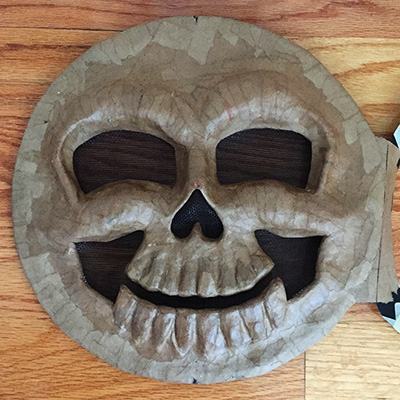
Behold my cuckoo clock skull mask for Mardi Gras 2016! Wow, this one was complicated and fun! Here’s the short version…
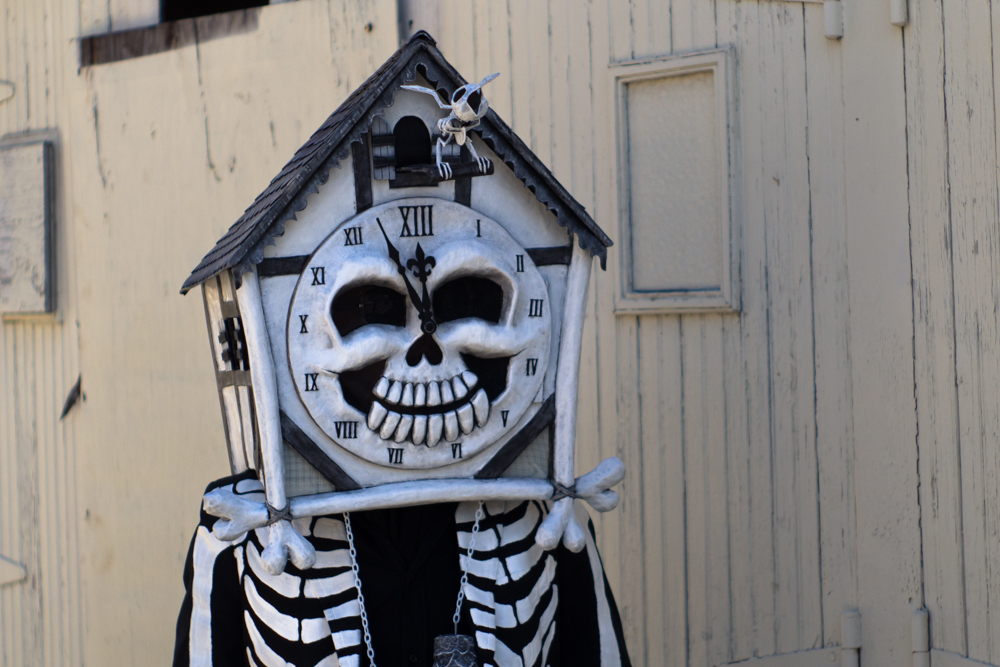
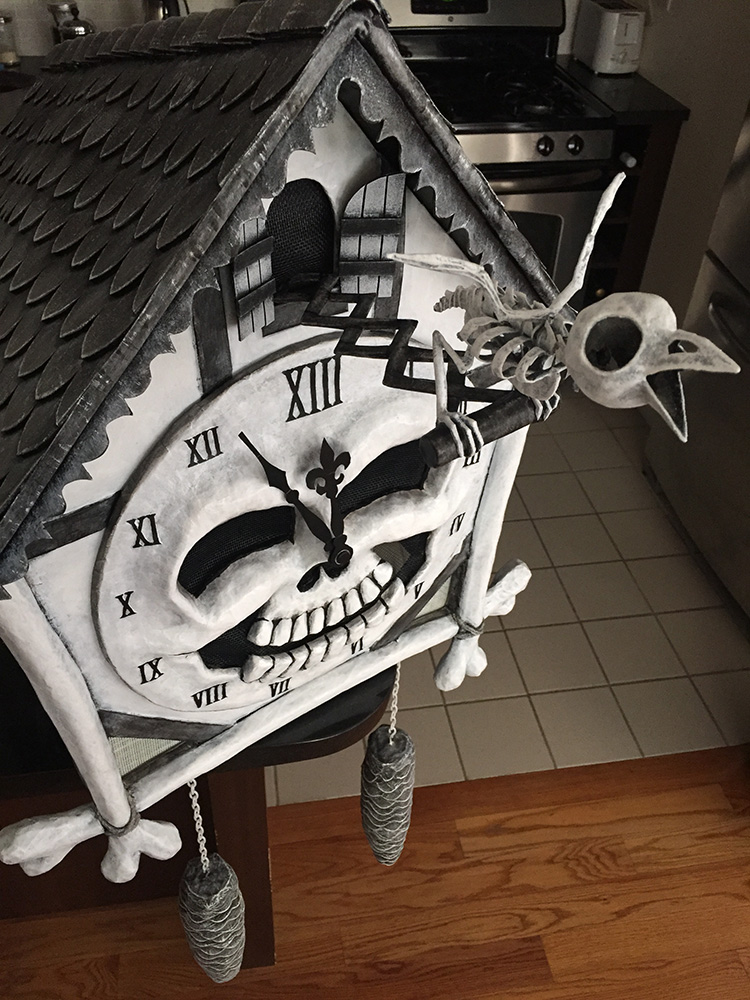
This mask was made up of a lot of individual paper maché parts that I built separately and assembled. Here’s a very quick rundown of the parts and what they’re made of:
The Devil Man and the Swamp Goddess
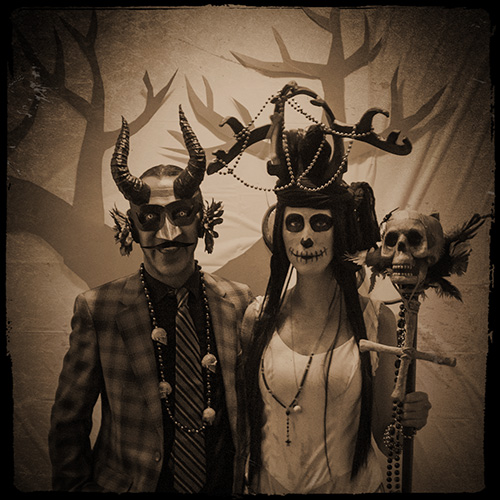
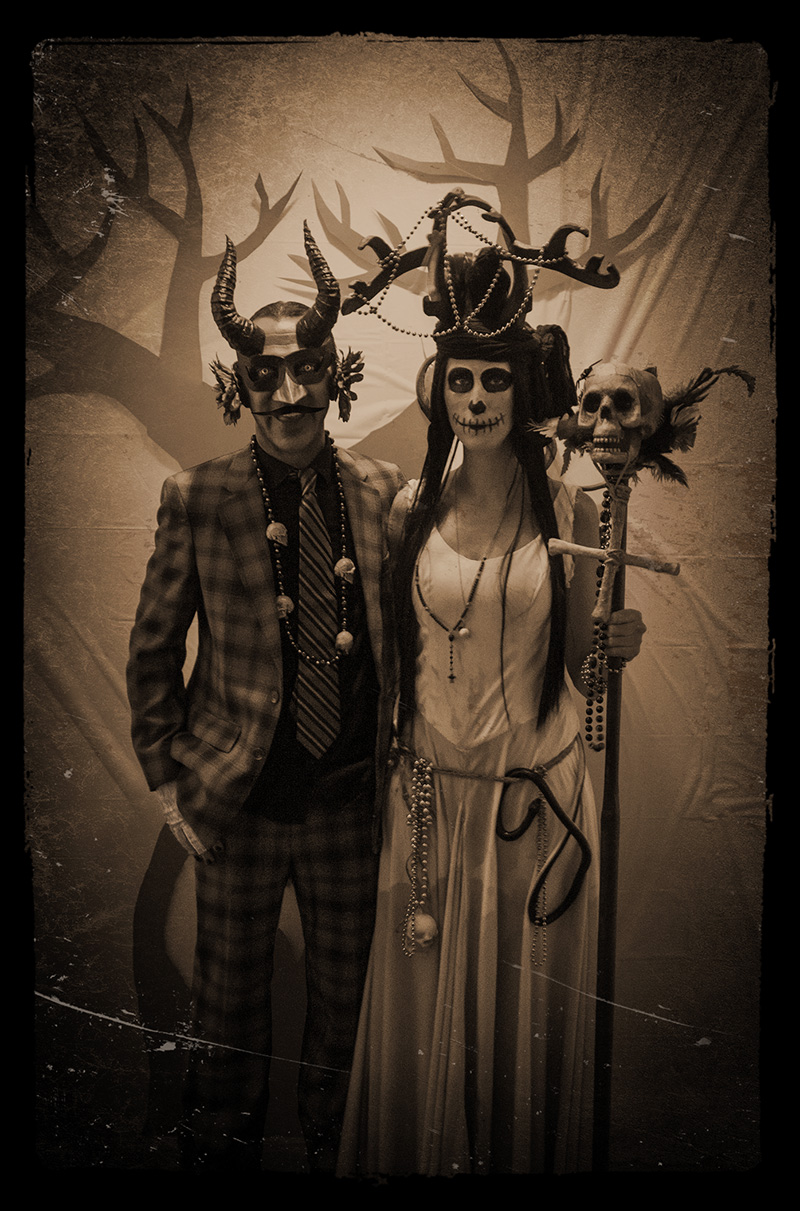
This old-timey photo of me and my fiancée — dressed as the Devil Man and a swamp goddess — is an edit of a photo by New Orleans photographer Kevin O’Mara, taken at our Voodoo Bayou Halloween party in 2015. In editing the pic in Photoshop I wanted to try to make it look like an authentic vintage Halloween card; I think it’s pretty close! Let’s see if this pic starts turning up in dumb listicles about terrifying old Halloween pics; I see those kinds of lists every year and half of the photos in them aren’t actually vintage, or aren’t actually Halloween-related.
You can see the original, unedited version of this pic (with crazy green lighting) in my post about making the foam board antlers for my fiancée’s headdress.
Voodoo Bayou Halloween party

Our Halloween party theme for 2015 was Voodoo Bayou! Here’s the animated invitation I made for the party.

Here are some pics our decorations, with links to how I made a lot of this stuff!
Devil Man mask with horns — part 2
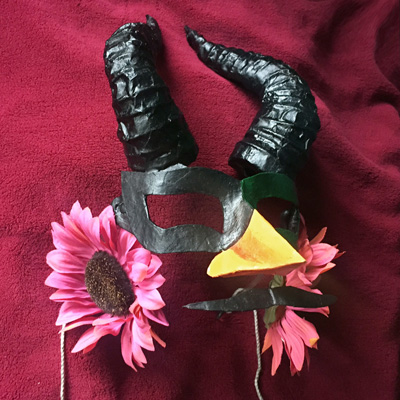
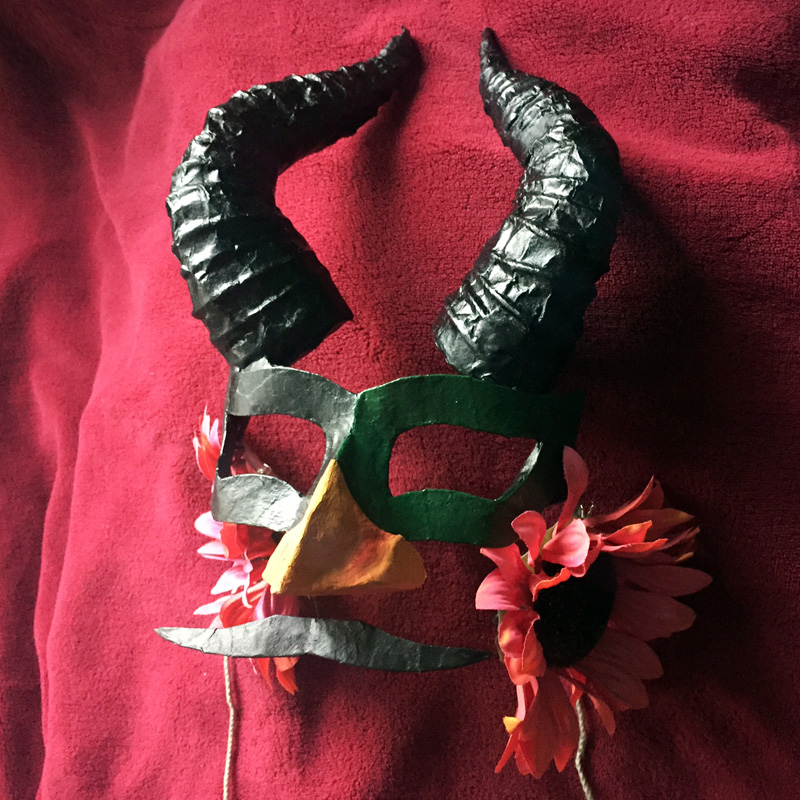
Okay, when we last left off, I’d finished the horns and the base for the mask. I neglected to take a lot of pictures of my process for putting the whole mask together, so I’ll explain all the remaining steps here.
 About Manning Krull
 How to make a 4-foot paper maché alligator
 My violin skull mask, Mardi Gras 2015
 Three-headed paper maché dragon sculpture